
JOURNAL
Notes from the treatment room.
Honest, clinically grounded advice on skin, ageing and treatment from Danielle at NICHE Clinical, Chester.

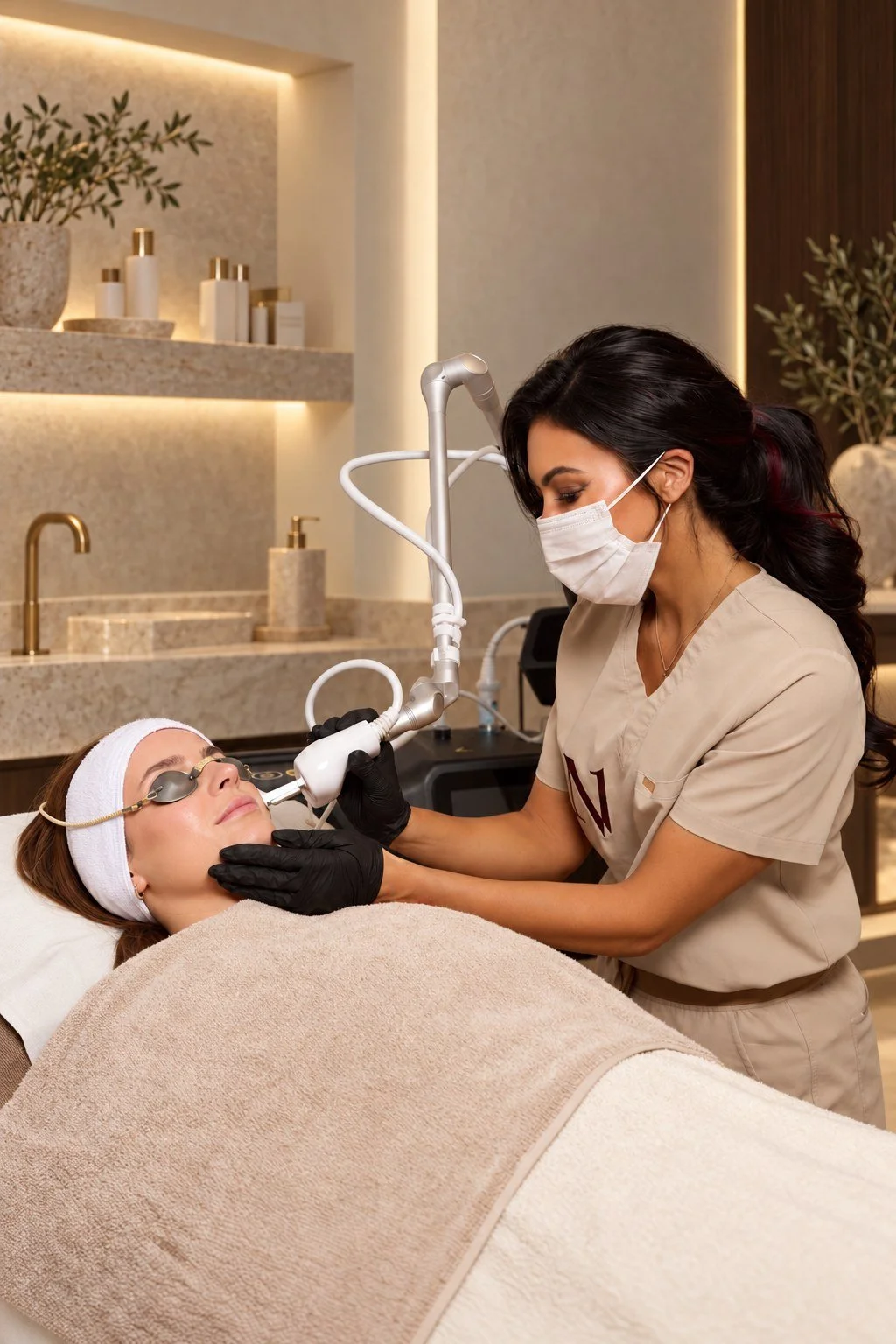
CO₂ Laser After 40: What It Can Actually Do for Ageing Skin
Collagen loss, crepey skin, pores and sun damage: what fractional CO₂ laser can realistically improve after 40, what it can’t, and why a proper consultation matters.
If you’re over 40 and starting to notice that your skin doesn’t quite behave the way it used to, you’re not imagining it.
As we age, collagen and elastin production naturally decline. Skin can begin to feel thinner, less firm and more crepey, while fine lines, pigmentation, enlarged pores and uneven texture often become more noticeable.
This is where CO₂ laser can be very different from treatments that simply add volume or temporarily improve the surface of the skin.
Rather than trying to change the shape of your face, fractional CO₂ laser works by creating controlled micro-injuries within the skin, triggering the body’s natural healing response and stimulating new collagen production.
The aim is to improve the quality, texture and firmness of your existing skin.
Why does our skin change so much after 40?
Collagen provides strength and structure, while elastin helps skin stretch and return to its original shape.
As we move through our 40s and 50s, several changes happen simultaneously.
Collagen production decreases, accumulated sun exposure becomes more visible, and hormonal changes associated with perimenopause and menopause can affect hydration, elasticity and skin thickness.
You might begin noticing:
Fine lines becoming more established
Crepey skin around the eyes and cheeks
Enlarged pores and uneven texture
Sun damage and pigmentation
Skin that appears less firm
Changes around the jawline and lower face
These changes are not always caused by a loss of facial volume. Sometimes, the skin itself has lost some of its structural support.
Understanding that distinction is important when choosing the right treatment.
What can CO₂ laser actually improve?
Fractional CO₂ laser is an ablative resurfacing treatment designed to improve skin quality by stimulating tissue renewal and collagen remodelling.
Fine lines and wrinkles
CO₂ laser can improve the appearance of fine lines, particularly around the eyes and mouth.
By encouraging collagen remodelling, the treatment can help the skin appear smoother and firmer over time.
Deeper wrinkles may soften, although they are unlikely to disappear completely.
Crepey skin and loss of firmness
Crepey skin is one of the concerns I hear most frequently from women over 40.
The skin may feel thinner, appear finely wrinkled or lack the firmness it once had.
Fractional CO₂ laser can improve skin texture and support collagen remodelling, which may produce a firmer appearance.
However, it is important to understand that laser resurfacing cannot replace a surgical lift where significant tissue laxity is present.
Enlarged pores and uneven texture
As collagen support declines, pores can appear more prominent and skin texture may become increasingly irregular.
CO₂ laser can help refine the appearance of enlarged pores and improve overall surface texture.
This can be particularly beneficial for women who feel their makeup no longer sits as smoothly on their skin.
Pigmentation and sun damage
Years of ultraviolet exposure can leave visible pigmentation, uneven tone and other signs of photoageing.
CO₂ resurfacing may improve certain types of superficial sun damage and uneven pigmentation.
However, not all pigmentation is suitable for laser treatment. Conditions such as melasma require particular caution because laser treatments can sometimes worsen pigmentation.
A proper skin assessment is essential.
Does CO₂ laser tighten the skin?
This is probably one of the most common questions I get asked.
The answer is yes, CO₂ laser can produce a degree of skin tightening, but the results depend on the individual and the extent of skin laxity.
The treatment stimulates a wound-healing response and collagen remodelling within the skin.
As this process develops, some patients notice improvements in firmness, fine lines and overall skin quality.
However, CO₂ laser does not replace lost facial volume or reposition significantly descended facial tissues.
For women who want to improve skin quality without adding filler, it can be a valuable treatment option when clinically appropriate.
When will you see the results?
One of the biggest misconceptions about CO₂ laser is that the results are complete once the skin has finished peeling.
They’re not.
The initial healing phase is only the beginning.
During the first few weeks, the skin gradually recovers from the resurfacing treatment.
Improvements in texture may become noticeable as healing progresses, but collagen remodelling continues for several months.
This means the final result cannot be judged simply by how the skin looks a week or two after treatment.
Some patients may benefit from a course of treatments, while others may be suitable for a single session.
The appropriate approach depends on skin condition, treatment intensity, desired results and recovery considerations.
Is CO₂ laser suitable for everyone over 40?
No — and this is really important.
CO₂ laser is a powerful treatment and suitability needs to be assessed properly. Your skin type, pigmentation risk, medical history, medications, previous treatments, lifestyle and expectations all need to be considered.
Some people may be better suited to a different treatment altogether.
This is why I don’t believe CO₂ laser should simply be booked because you’ve seen an impressive before-and-after photograph online. Consultation and correct patient selection matter just as much as the technology itself.
Considering CO₂ laser in Chester?
If you’re noticing changes in your skin and aren’t sure whether CO₂ laser, RF microneedling, professional skincare or another treatment would be most appropriate, the best place to start is with a consultation.
At NICHE Clinical in Chester, I assess the skin and the concern first and then discuss the options that are genuinely appropriate for you.
Because the goal isn’t to make you look like somebody else.
It’s to help you feel confident in your skin without changing your face.